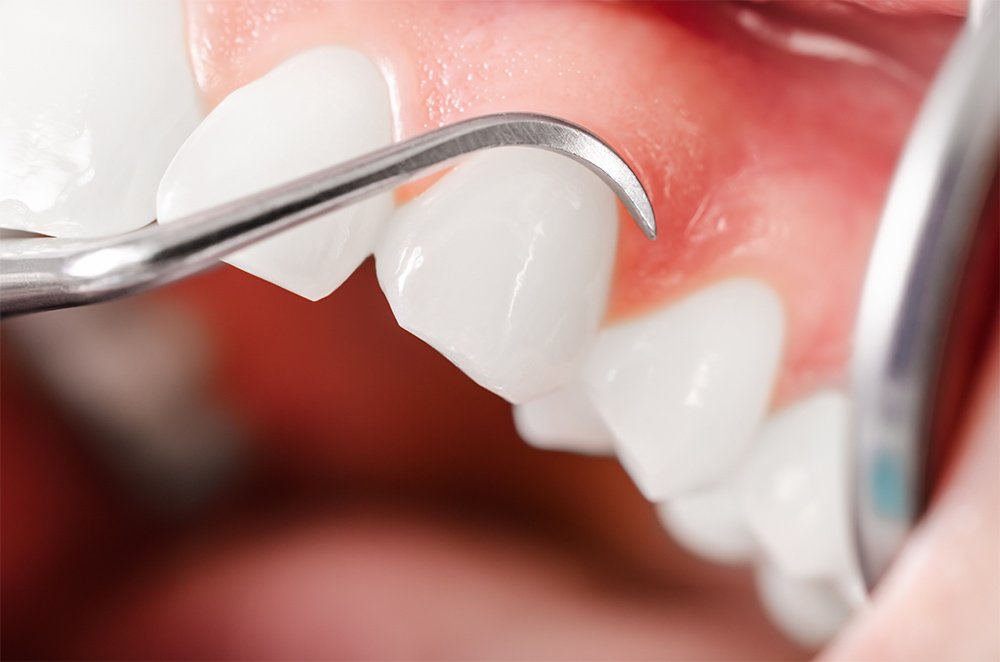
From early gingivitis to advanced periodontitis, our board-certified periodontists diagnose gum disease early and build a treatment plan that protects your teeth, your gums, and your smile for the long term.
Periodontal disease, more commonly known as gum disease, is an inflammatory condition that affects the gum tissue and, if left untreated, the bone that holds your teeth in place. It typically begins quietly, with mild irritation or bleeding that many people brush off as normal, and it is far more common than most patients realize. Studies suggest that close to half of adults in the United States have some form of periodontal disorder, and the rate climbs significantly after age 65.
Left unaddressed, gum disease is the leading cause of adult tooth loss, which is exactly why we treat it as a priority at every visit. The encouraging news is that periodontal disease exists on a spectrum. Caught early, it is entirely reversible. Caught late, it still responds well to the right combination of non-surgical and surgical care. Our team specializes in identifying exactly where a patient falls on that spectrum and mapping out a plan to protect the smile from there.
Periodontal disease does not appear overnight, and it does not progress the same way in every patient. During your evaluation, one of our periodontists measures gum pocket depth, checks for bleeding and bone loss, and reviews your history to determine exactly which stage you are in before recommending treatment.
The earliest stage. Gums appear red, swollen, or tender and may bleed when you brush or floss. The supporting bone is not yet affected, and with a thorough cleaning and improved home care, gingivitis is fully reversible.
Inflammation begins to affect the fibers and bone anchoring the teeth. Shallow pockets start to form between the tooth and gum. This stage typically calls for non-surgical periodontal therapy, including scaling and root planing.
Pockets deepen and more bone support is lost, sometimes accompanied by gum recession around the roots. Beyond deep cleaning, patients at this stage often benefit from a gum graft to cover exposed roots and stabilize the tissue.
Significant bone and tissue loss can leave teeth loose or shifting. Our doctors may recommend periodontal regeneration to rebuild lost bone and tissue and preserve as many natural teeth as possible.
Gum disease treatment is not a general dentistry service. It calls for a periodontist with advanced training in the tissues and bone that support your teeth.
Dr. Rana Shahi, Dr. Priscilla Young, and Dr. Ivana Yi are each board-certified periodontists who focus exclusively on gum and bone health, not general dentistry. That depth of training matters when diagnosing exactly how far a case of gum disease has progressed.
Because our practice offers everything from routine scaling and root planing to gum grafting and regenerative bone procedures, your care can advance seamlessly as your needs change, without being referred elsewhere mid-treatment.
Our Wilshire Blvd practice has earned a 5.0 rating across 133+ Google reviews and a 4.9 rating on Yelp, reflecting the comfort and clarity patients feel throughout their periodontal care with us.
Gum disease can be subtle in its early stages, which is why regular checkups matter. If any of the following sound familiar, it is worth scheduling a periodontal evaluation.
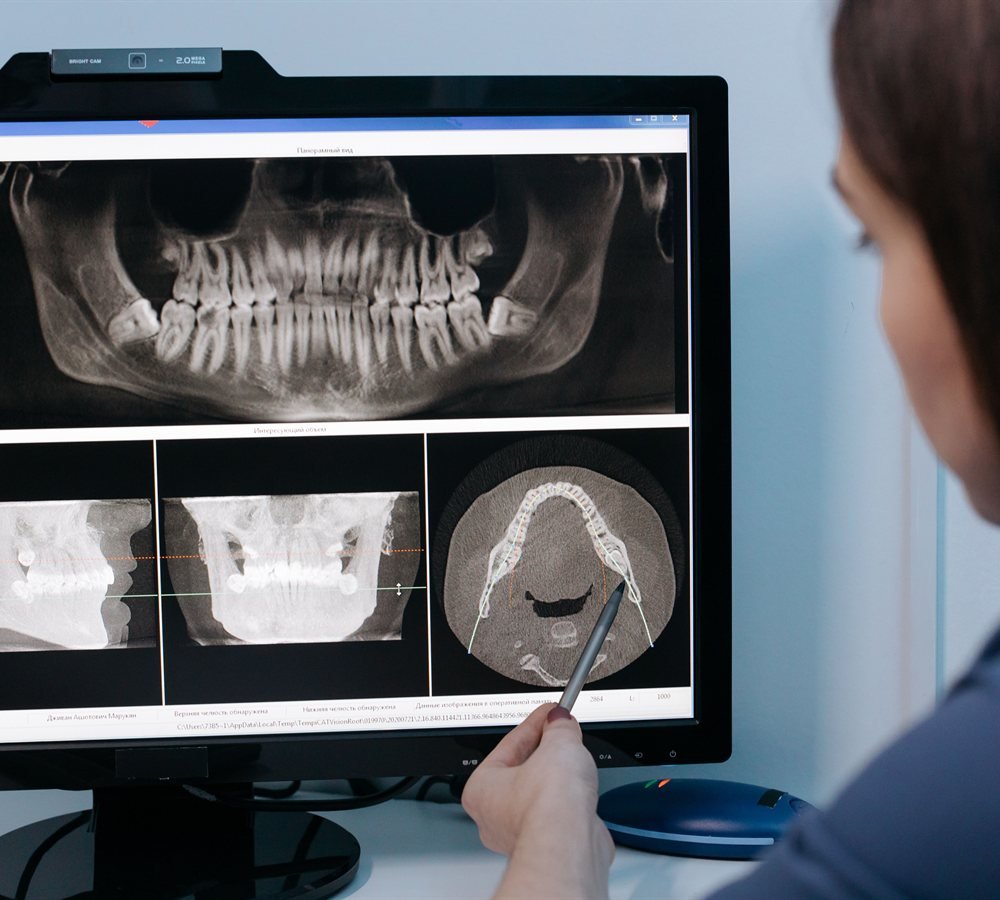
Request an EvaluationWe start with a comprehensive periodontal exam, measuring pocket depth around each tooth, reviewing dental x-rays, and evaluating gum tissue for inflammation and recession. This lets your periodontist stage your gum disease accurately and explain, in plain language, exactly what is happening and why. From there, we walk through the recommended treatment path, whether that means a deep cleaning, a referral within our own practice to therapy, grafting, or regenerative care, and what results you can reasonably expect.
Gum disease is manageable, but it is also a condition that benefits from consistent monitoring. Most patients who have been treated for periodontitis move to a periodontal maintenance schedule, typically every three to four months, so we can track pocket depths, reinforce home care habits, and catch any recurrence early. Good daily brushing and flossing at home remain the foundation of keeping gum disease from returning.
The earlier periodontal disease is caught, the simpler it is to treat. Schedule a consultation with one of our board-certified periodontists and get a clear picture of where your gum health stands.
We'll confirm your visit within one business day.
