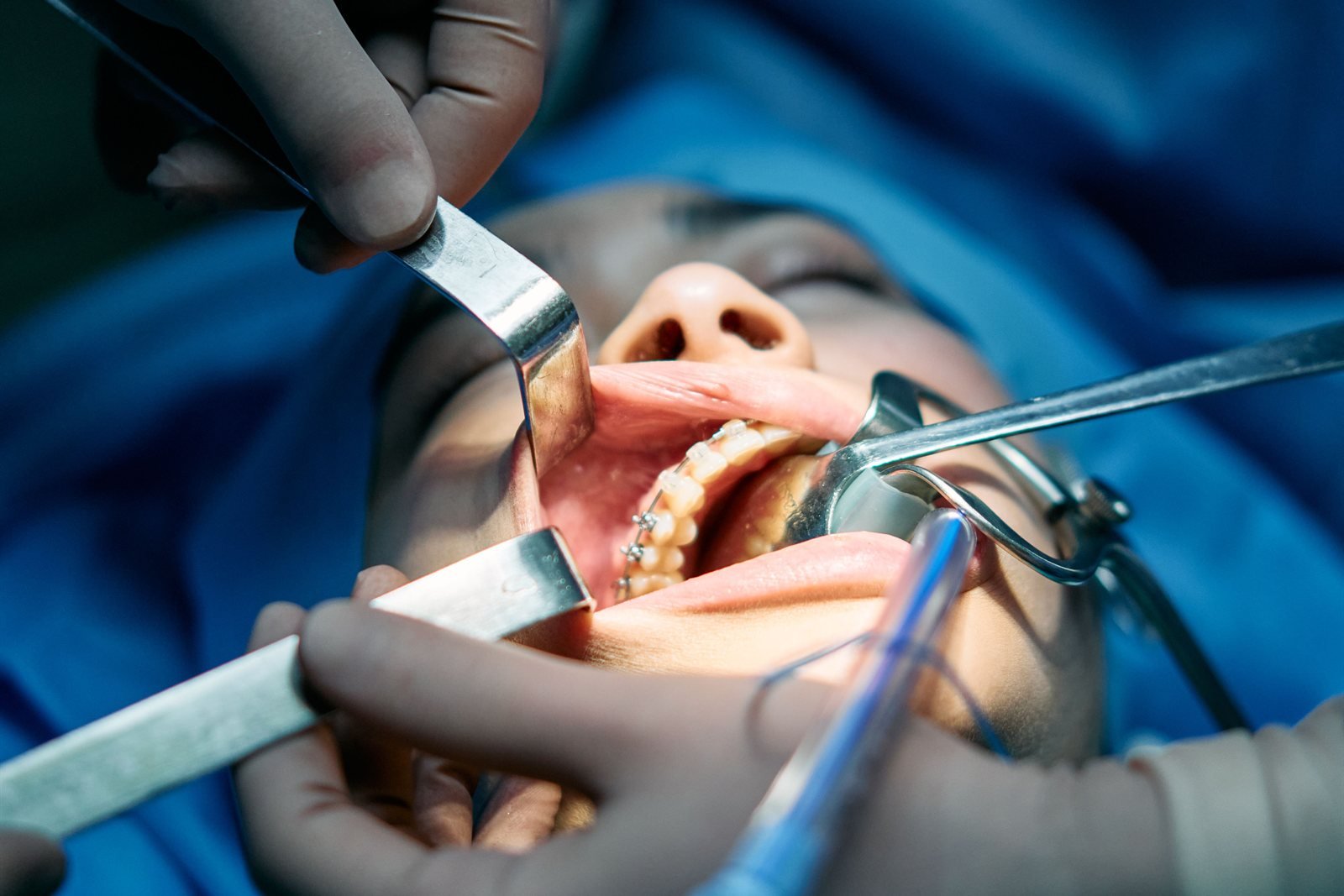
Cover exposed roots using the pinhole surgical technique, a scalpel-free, suture-free approach to soft tissue grafting available at our Wilshire Blvd practice.
Traditional gum grafting covers exposed roots by harvesting tissue and suturing it in place. The pinhole surgical technique takes a different path. Instead of cutting a piece of tissue and stitching it down, your periodontist makes a single small entry point, or "pinhole," in the existing gum tissue near the recession. Through that pinhole, specialized instruments gently loosen and glide the patient's own gum tissue down and over the exposed root.
Small collagen strips are then placed beneath the tissue through the same pinhole to help hold it in its new, more protective position while it stabilizes. Because there is no cutting, no donor-site wound on the palate, and no sutures to remove, many patients find this soft tissue grafting approach considerably more comfortable during recovery than traditional grafting.
This page focuses specifically on that minimally invasive approach and on connective-tissue grafting performed with smaller incisions, both of which are soft tissue techniques designed to reposition or add tissue over receded roots with less disruption to the surrounding gum. If you would like a broader overview of gum recession, traditional grafting, and all of the techniques we offer, visit our main gum graft page.
Recession is frequently connected to periodontal disease, so any active gum disease is typically addressed first. Our team, led by Dr. Rana Shahi along with Dr. Priscilla Young and Dr. Ivana Yi, will confirm during your consultation whether the pinhole approach or a small-incision connective-tissue graft is the better fit for your specific pattern of recession.
The appeal of this technique is its simplicity. Here is what a typical visit looks like from start to finish.
The treatment area is numbed with local anesthesia. Because no palate donor site is needed for the pinhole technique, there is one less surgical site to numb and heal.
Your periodontist creates one small entry point in the gum tissue above the recession, rather than the incisions used in traditional grafting.
Fine instruments are guided through the pinhole to gently loosen and glide existing gum tissue down over the exposed root, and collagen strips are placed to stabilize it.
Because the tissue is repositioned rather than cut and re-attached, there is nothing to suture. You leave with clear instructions for a gentle, low-disruption recovery.
Minimally invasive grafting rewards precision and experience. Here is why patients trust our team with this technique.
Dr. Rana Shahi, Dr. Priscilla Young, and Dr. Ivana Yi are board-certified periodontists trained in both traditional and minimally invasive soft tissue grafting, so your treatment is matched to the technique that suits your anatomy, not the other way around.
Because the pinhole approach avoids a palate donor site and sutures, our team can often treat multiple teeth in a single visit while keeping your day-to-day disruption to a minimum.
Not every case of recession is right for a pinhole approach. We will tell you plainly whether you are a good candidate, or whether traditional connective-tissue grafting will serve you better long term.
The pinhole technique is not the right fit for every patient. Severe recession, very thin or fragile gum tissue with little to reposition, or cases needing a significant amount of added tissue volume are often better served by a traditional connective-tissue graft using donor tissue from the palate or a tissue bank.
During your consultation, your periodontist will measure the extent of your recession and the thickness of your existing tissue to determine which soft tissue grafting approach will give you the most predictable, long-lasting result. For the full picture of traditional grafting options, see our gum graft overview.
Because there is no donor-site wound or sutures to manage, many patients report an easier recovery than with traditional grafting.
Mild tenderness and slight swelling near the treated teeth are common. Most patients do not experience the palate soreness associated with a traditional donor site, since none is used.
You will follow gentle brushing guidance around the treated area while the repositioned tissue stabilizes. Many patients return to normal eating within a few days.
Tissue continues to settle into its new position over the following weeks. Follow-up visits let your periodontist confirm the area is healing as expected.
Schedule a consultation and find out whether the pinhole technique or another soft tissue grafting approach fits your case.
Answers specific to the pinhole surgical technique and other minimally invasive soft tissue grafting options.
A traditional gum graft harvests donor tissue and sutures it over the area of recession. The pinhole technique instead makes one small entry point and repositions your own existing gum tissue over the exposed root, using collagen strips instead of sutures to hold it in place.
The area is numbed with local anesthesia before treatment. Because there is no palate donor-site wound and no sutures, many patients describe the discomfort afterward as milder than what they expected from a traditional graft.
Because the technique does not depend on a limited supply of donor tissue from the palate, multiple teeth in the same area of the mouth can often be treated during a single appointment. Your periodontist will confirm what is appropriate for your case.
Not always. The pinhole technique works best for mild to moderate recession where there is enough of your own healthy tissue nearby to reposition. More severe or advanced recession is often better addressed with a traditional connective-tissue graft, which we also offer.
Many patients find recovery more comfortable, largely because there is no donor-site wound on the palate and no sutures to remove. Individual healing still varies, and your periodontist will give you a recovery timeline based on your specific treatment.
Tissue coverage is often visible soon after the procedure, but full stabilization and maturation of the repositioned tissue continues over the following weeks. Your periodontist will monitor healing at follow-up visits.
If your evaluation shows that traditional grafting is a better fit, your periodontist will explain why and walk you through connective-tissue or free gingival grafting instead. Learn more on our general gum graft page.
Coverage depends on your specific plan and on whether treatment is considered medically necessary. Our team will help verify your benefits before scheduling.
We'll confirm your visit within one business day.
